A lot of calls to the shop start the same way: "Do you do TIG?" or "I need this MIG welded." We do all of them, MIG, TIG, stick and spot, and most of the time the person asking does not need to choose. But it helps to know why a shop reaches for one over another, because it explains the price, the time and what the finished weld looks like.
The Short Version
| Process | Best at | Typical work |
|---|---|---|
| MIG | Speed on steel | Frames, platforms, brackets, production runs |
| TIG | Control and appearance | Stainless, aluminum, thin material, visible welds |
| Stick | Heavy and imperfect steel | Thick sections, repairs, structural work |
| Spot | Joining sheet to sheet | Sheet metal enclosures, cabinets, guards |
MIG: The Everyday Process
MIG feeds a wire through the gun while a shielding gas keeps air off the weld. The welder pulls the trigger and moves. It is quick, it puts down a lot of metal, and it is easy to keep consistent from one part to the next, which is why most carbon steel fabrication is MIG welded. If you are having frames, platforms or fifty of the same bracket made, this is how they go together. It is the least expensive process per inch of weld, and on a production run that adds up.
TIG: Slow, Clean and Precise
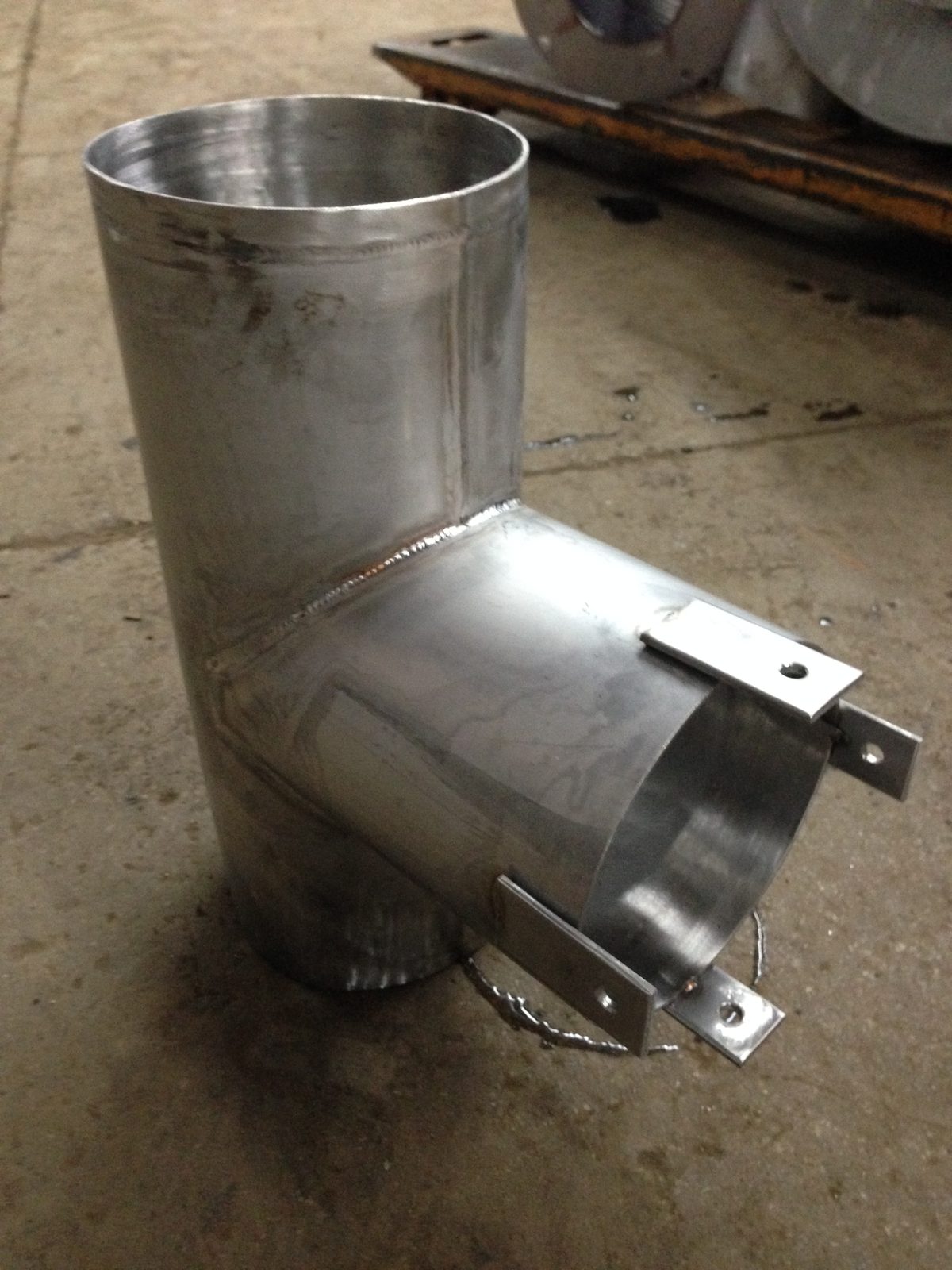
TIG uses a tungsten electrode to make the arc, and the welder feeds filler rod with the other hand. Heat and filler are controlled separately, so a good welder can lay a small, even bead on thin material without burning through. It is the process for stainless steel in food, medical and process work, for most aluminum, and for any joint that will be looked at. The part in the photo above is the sort of thin wall stainless work where that control matters. The trade is time. TIG is several times slower than MIG, and the quote reflects that.
Stick: Old, Simple and Still Useful
Stick welding uses a coated rod that makes its own shielding as it burns. There is no gas bottle and no wire feeder, and it digs deep into heavy steel. It also puts up with steel that is not perfectly clean better than the other processes do, which makes it a natural for repair work on thick, worn parts and for heavy structural sections. It leaves slag that has to be chipped off and it is not a pretty weld, so it is not what gets used on a stainless handrail.
Spot Welding: Sheet Metal Only
A spot welder clamps two overlapping sheets between copper tips and fuses them at a point, with no filler at all. It is fast and leaves almost no mark, and it only works on thin sheet that overlaps. Cabinets, enclosures and guards are where it earns its keep.
How We Pick
Material. Carbon steel usually means MIG. Stainless and aluminum usually mean TIG, with MIG on heavier sections.
Thickness. Thin material wants the control of TIG. Heavy plate wants the deposit of MIG or stick, often in several passes.
What it has to do. A sanitary tank, a structural connection and a machine guard have very different requirements. Structural and load bearing work is welded under our Canadian Welding Bureau certification to CSA W47.1.
How it has to look. If the weld is on show and is not getting ground or painted, that points to TIG.
How many. One part and five hundred parts get planned differently, and speed starts to matter.
Plenty of jobs use more than one. A stainless frame might be MIG welded where it is heavy and hidden and TIG welded where it is thin or seen.
What to Tell Us
You do not need to name a process. Tell us the material if you know it, the thickness, what the part does, whether it carries a load, where it will live and how it should look when it is done. Send a drawing, a sketch or a photo. If it is a repair, bring the part to the shop on Mainway so we can see the break. All of our welding is done here in the shop, where the machines, the fixtures and the cranes are.